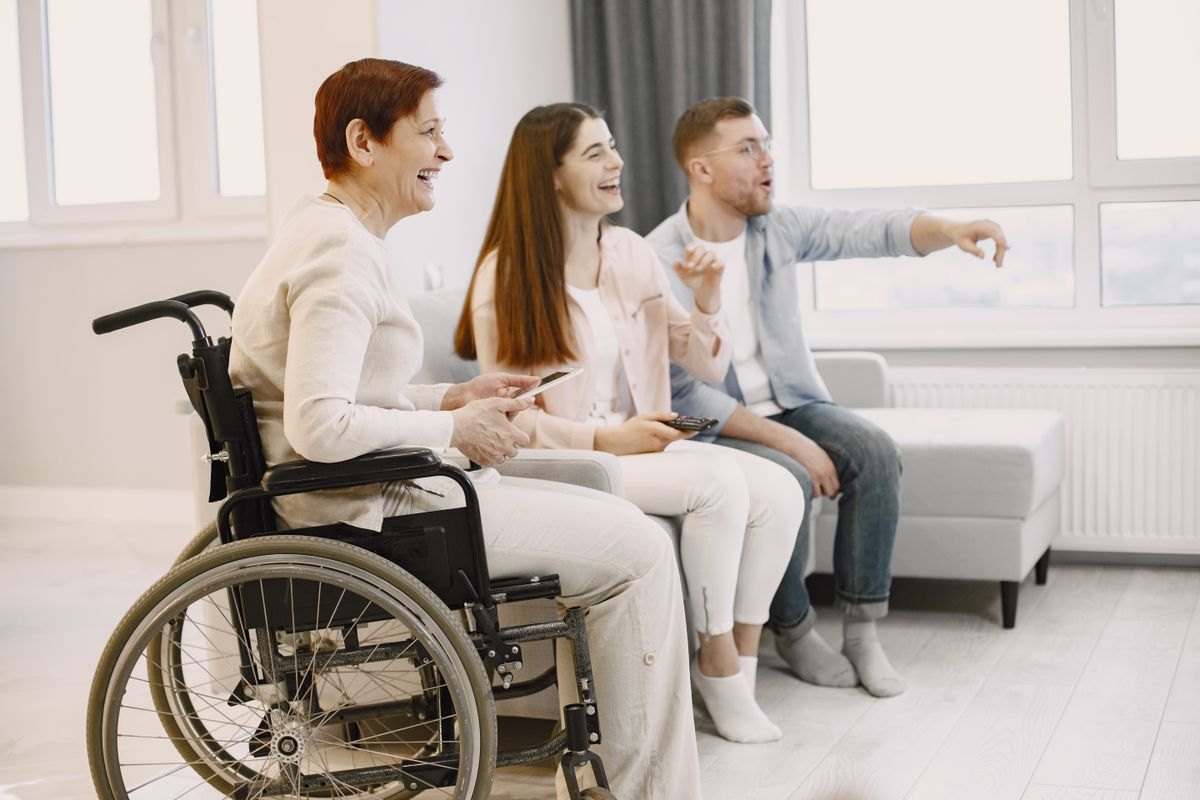
Grandparents may want to contribute while managing mobility, hearing, vision, fatigue, transport or other access needs of their own. Ask what would work for them instead of assuming either that they can do everything or that they cannot help. Their role can be meaningful without involving lifting, driving or long hours of baby care.
Begin with the tasks the household needs covered and invite them to choose. Preparing a familiar meal, folding clean clothes while seated, reading with an older child or coordinating a grocery order may suit different people. Do not assign a task solely because of a person's age or a visible disability.
Discuss the space before the visit
Describe stairs, parking, bathroom access and the seating available. Ask whether they need a particular arrangement, such as a chair with arms, a clear walking route or a quieter room for conversation. If you cannot provide the access they need, consider another way for them to help rather than expecting them to manage an unsuitable space.
Keep entrances and indoor paths clear. Baby equipment and delivery bags can gradually narrow a route that used to be easy to use. Ask another adult to move items before the grandparent arrives, without requiring the recovering parent to do the heavy work.
If they use mobility equipment, let them explain how they want assistance. Do not move or hold their equipment without asking. Make sure an agreed task does not require them to carry objects while using a walking aid or reach beyond what is comfortable.
Make information accessible
Give instructions in the format they prefer. A printed note with readable text may be better than a fast-moving group chat. A phone conversation may work better than a voice message, or the opposite. Ask rather than guessing.
For a task involving the baby, explain the current routine and relevant safety or care instructions clearly. Invite questions and check understanding without treating the grandparent like a child. Familiarity with raising children does not mean the equipment or guidance is the same as it was years ago.
If the role is household support rather than baby care, keep the information relevant. A person bringing lunch does not need access to the parent's medical paperwork or a detailed feeding record. Respect for privacy applies regardless of family relationship.
Set a length and a way home
Agree on the visit duration and transport before the day. A grandparent may enjoy an hour of company but find a full afternoon tiring. If another person is driving them, confirm collection time and what happens if either household needs to change the plan.
Do not make their contribution conditional on staying longer or taking on another job. Ask whether they want a break, and make it easy to say no. The household can appreciate help without relying on someone to exceed their own limits.
Include remote contributions
A grandparent who lives far away or cannot enter the home may still read to an older child by video, organize agreed meal offers or arrange a delivery with permission. Keep technology simple and arrange a time that suits both households. A remote helper should not have to monitor the family all day to feel involved.
After the first visit or task, ask what should change next time. The best arrangement respects the new parents' needs and the grandparent's capacity at the same time, without pretending either is fixed forever.